The Bijvoet Centre for Biomolecular Research at Utrecht University studies the relation between the structure and function of biomolecules.
The Bijvoet Centre for Biomolecular Research at Utrecht University is part of the Instruct-NL national Instruct Centre in the Netherlands and has facilities for mass spectrometry, electron microscopy, X-ray crystal structure determination and high-field NMR instrumentation for both liquid- and solid-phase NMR.
The Bijvoet Centre currently offers access through Instruct-ERIC to proteomics mass spectrometry and to both solution- and solid-phase NMR to enable structure determination of biomolecules and/or the characterization of their macromolecular complexes. In addition,the Bijvoet Centre provides direct access to HADDOCK, an information-driven flexible docking approach for the modeling of biomolecular complexes. More information can be found on the HADDOCK web portal.
The Bijvoet Centre is currently available for remote access, as well as physical visits by scientists from EU countries, Schengen countries, UK, and select other countries but availability can be limited. Please check possibilities with a Centre representative. For information on the availability of specific technologies, view the Technology Availability List or contact support@instruct-eric.eu. Please check here regularly for updates.
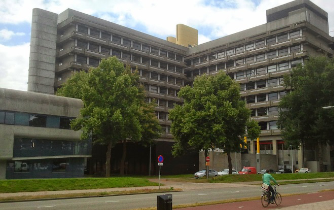
How to find us: The Bijvoet Centre is located at Utrecht Science Park in Utrecht, the Netherlands. Please see the Bijvoet Centre website for detailed contact information.
The Bijvoet Centre houses solid state 1200, 800, 700, 500 and 400 MHz NMR equipment for the characterisation of biomolecules, their structure determination and dynamical and functional studies. All of the NMR instruments are state-of-the-art digital Bruker NMR spectrometers.
Not only are the standard pulse sequences for spectroscopic, structural, dynamical, and functional characterisation available, the Bijvoet Centre also offers tailored pulse sequences for structural determination of high molecular weight proteins and other special applications such as in-cell NMR experiments. Dynamic Nuclear Polarization (DNP) capabilities on the 800 and 400 MHz instruments provide a significant boost in sensitivity.
View All Magnetic Resonance Techniques at Instruct
View All Solid State NMR at Instruct
The Utrecht NMR group offers access and support for screening projects through solution and solid-state NMR on the following systems:
Mass spectrometry based proteomics enables the identification and quantification of cellular proteins and their modified forms. The Biomolecular Mass Spectrometry and Proteomics group at the Bijvoet Centre provides access to qualitative proteomics analysis of proteins in complex samples. Instrumentation available includes advanced HPLC and state-of-the-art mass spectrometers.
The Bijvoet Center at UU offers access and support for solution NMR studies of biomolecules at field strengths ranging from 500 MHz up to 1.2 GHz. The instruments are well-equipped for all standard structural and dynamical characterization of proteins or other biomolecules, with cryoprobes for enhanced sensitivity on three machines.
The Facility has extensive expertise in the study of protein structure, dynamics and interactions. Applications involving high molecular weight proteins or protein complexes, such as nucleosome-protein complexes (200-250 kDa) for instance, benefit from the available tailored pulse sequences, provided these samples are appropiately isotope-labelled. We can now also offer dedicated support for applications involving interactions of intrinsically disordered proteins. Finally, support for medium to high-througput screening will be offered mid 2022.