2024 has been a revolutionary year at Instruct and beyond, with artificial intelligence coming more significantly to the forefront of structural biology research. The success of AlphaFold 3 in the first half of the year, followed by the recognition of computational protein design and structure prediction as worthy of the Nobel Prize in October, demonstrate the direction that structural biology is likely to be heading. As the leading research infrastructure in structural biology, Instruct is developing tools and strategies to remain ahead of the curve, and continue to offer the best services for structural biology researchers.
Latest Instruct-ERIC News
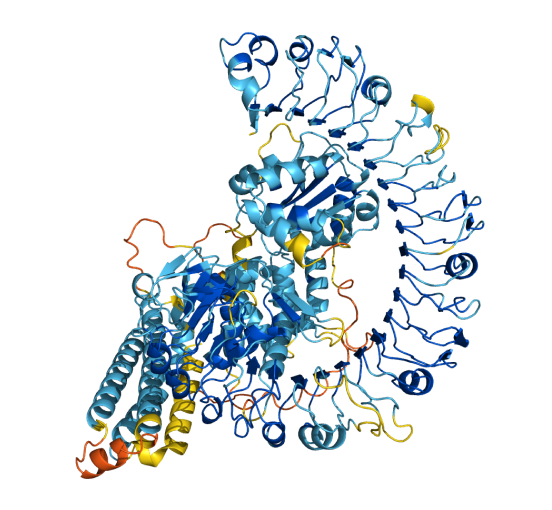
AI and Structural Biology
Instruct has created a new AI page on the website, detailing to users the available tools and services for structure prediction, and which Instruct technologies are best placed for structure validation. Explore the page here.
iNEXT-Discovery Ended
Since 2020, iNEXT-Discovery provided access to many structural biology technologies across Europe. This year the project came to an end, meaning Instruct is currently the sole option for funded access to structural biology technologies. Find out more here.
Early Career Researcher Call
Instruct launched and awarded its first ECR call, providing additional travel & accommodation and consumable funding for early career researchers. Seven researchers were awarded funding, see the full list here and get ready for the new call in 2025.
ELIXIR - Instruct MOU
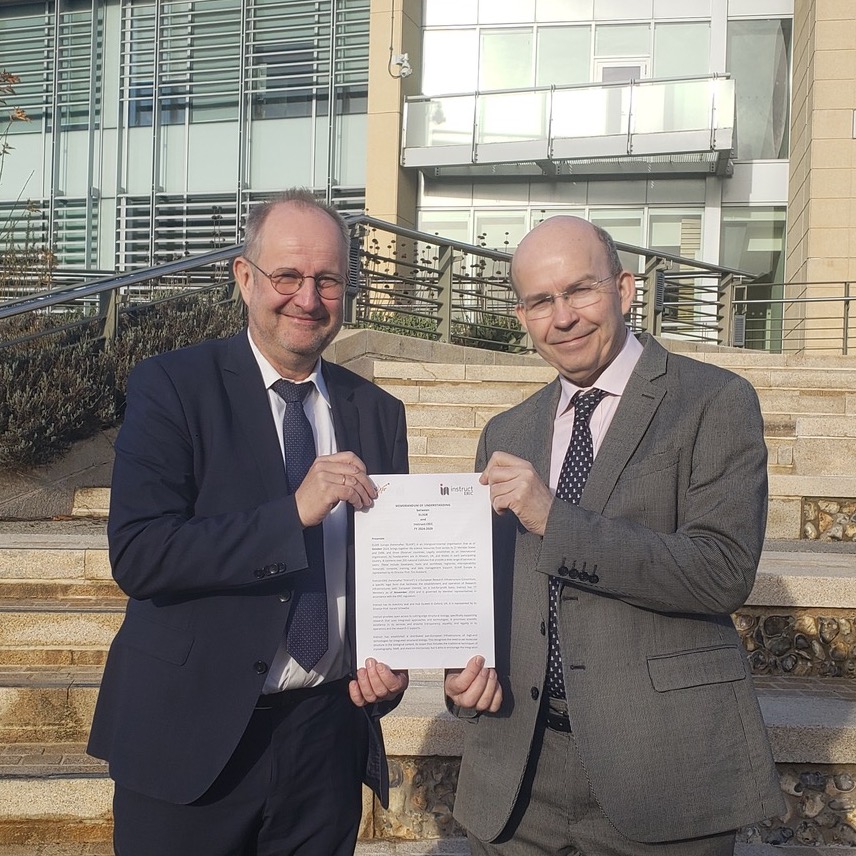
ELIXIR, the European life science data infrastructure, signed an MOU with Instruct – this will significantly enhance Instruct’s capacity for data management and FAIRness, and will continue to boost AI development within structural biology. Find out more here.
Instruct-ERIC Science Highlights
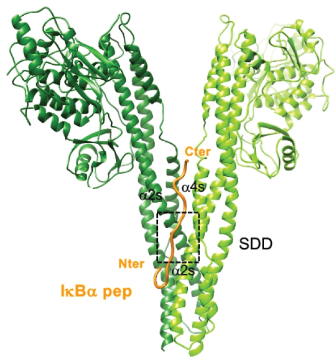
The team from CNRS accessed X-ray crystallography and biophysical techniques at IGBMC (Instruct-FR1) to reveal the structure and mechanism of IKK catalytic dimer docking with NFκB substrates. Read the full highlight here.
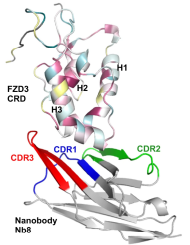
Nanobody discovery at VIB (Instruct-BE), followed by X-ray crystallography at Diamond Light Source (Instruct-UK) allowed the University of Oxford team to characterise the structure of transmembrane G-protein coupled receptor, Frizzled. Read more here.
Member Updates
Instruct-CZ
CEITEC
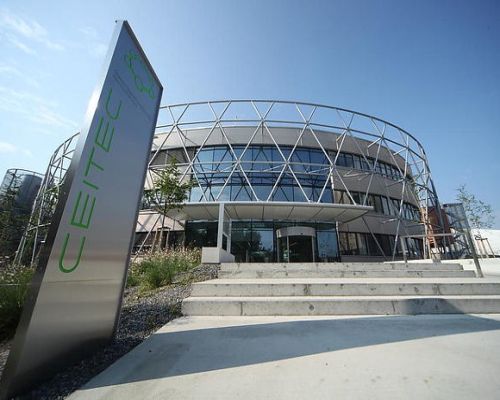
The Biomolecular Interactions and Crystallography Core Facility of CEITEC MU installed three new instruments: mass photometer with fluidics system, fluorimeter for fluorescence anisotropy and time-resolved experiments and CD spectrophotometer. All instruments shall be accessible from the beginning of 2025. Read more here.
Instruct-CZ
BIOCEV
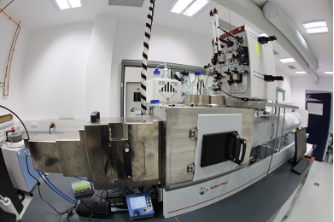
In CF Diffraction Techniques, BIOCEV have successfully upgraded the X-ray source of the SAXS instrument. The upgrade of MetalJet C2 to D2+ brought more than double intensity of the primary beam. The instrument enables rapid standard SAXS measurements with a low volume autosampler, SEC-SAXS experiments or special applications, now with substantially improved signal to noise ratio. Read more here.
Instruct-FR2
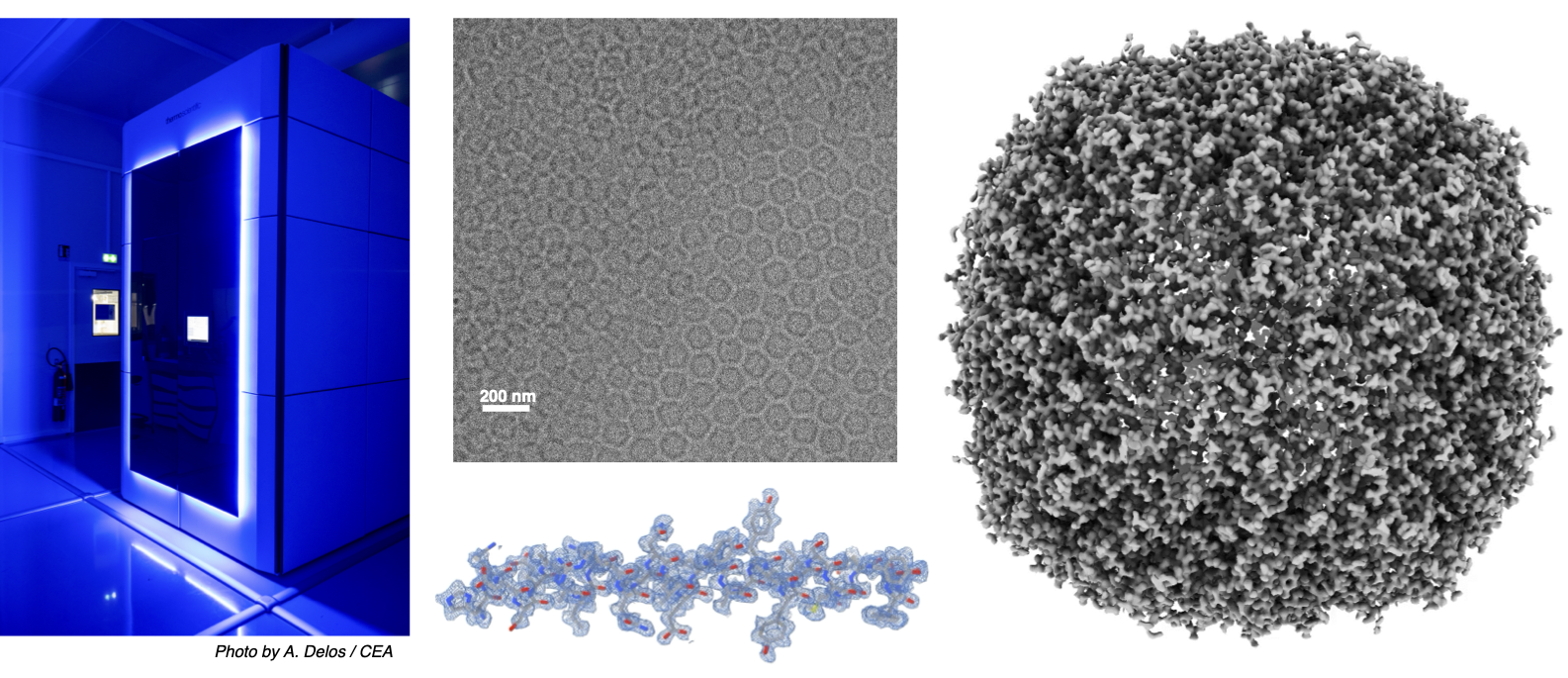
IBS Grenoble launches CM02, a novel Titan Krios G4 microscope. Part of three state-of-the-art cryo-TEMs funded by the France Cryo-EM project, the Grenoble installation will serve the French community and its European partners at Instruct-ERIC for single-particle and tomography experiments. Read more here.
Project Updates
Fragment-Screen
The Fragment-Screen project continues to develop tools and mechanisms for fragment-based drug discovery, with an increasing number of papers being published in the context of the project – read through them here.
canSERV
The canSERV project has run several calls in recent months, providing funded access to Instruct structural biology technologies for cancer research. Keep up with the project here, and look out for future calls in the new year.
ERIC Forum 2
As part of the ERIC Forum 2 project, Instruct co-authored a report on the mechanisms that research infrastructures use to engage with international partners. Take a look at the report here and provide us with your feedback!
eRImote
The eRImote project came to an end in November 2024. One of the key outcomes from eRImote was the Green Paper: Facilitating remote and virtual access provision. Take a look at the paper here and see how you can make the most of remote access.
Instruct-ERIC is now on Bluesky!
Make sure you join us and thousands of other structural biologists to keep up with the latest news and events in the community, and join the conversation!